16 Best Footwear Website Examples

I found the best footwear website examples that boost your sales!
These sites prove that footwear design succeeds when bold product presentation meets frictionless shopping. Here’s what separates winners from the rest:
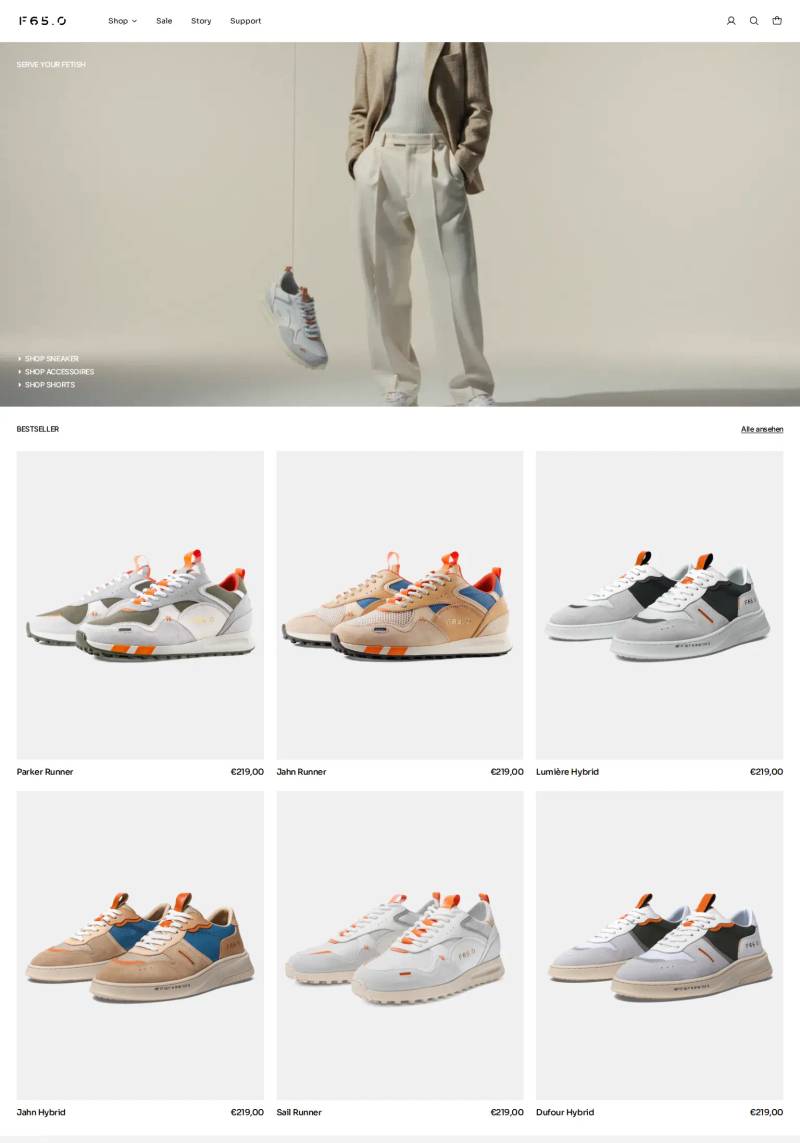
- Lead with instant visual impact. F65.0
 uses bold hero imagery and clean product grids that let premium sneakers command attention, while Impact Shoes
 electrifies with high-contrast black and yellow that screams urgency.
 - Simplify navigation with smart segmentation. Shoe Store’s bold “SHOES” and “BAGS” division directs shoppers immediately, and Varaya’s
 straightforward boot categories let sophisticated design whisper instead of shout.
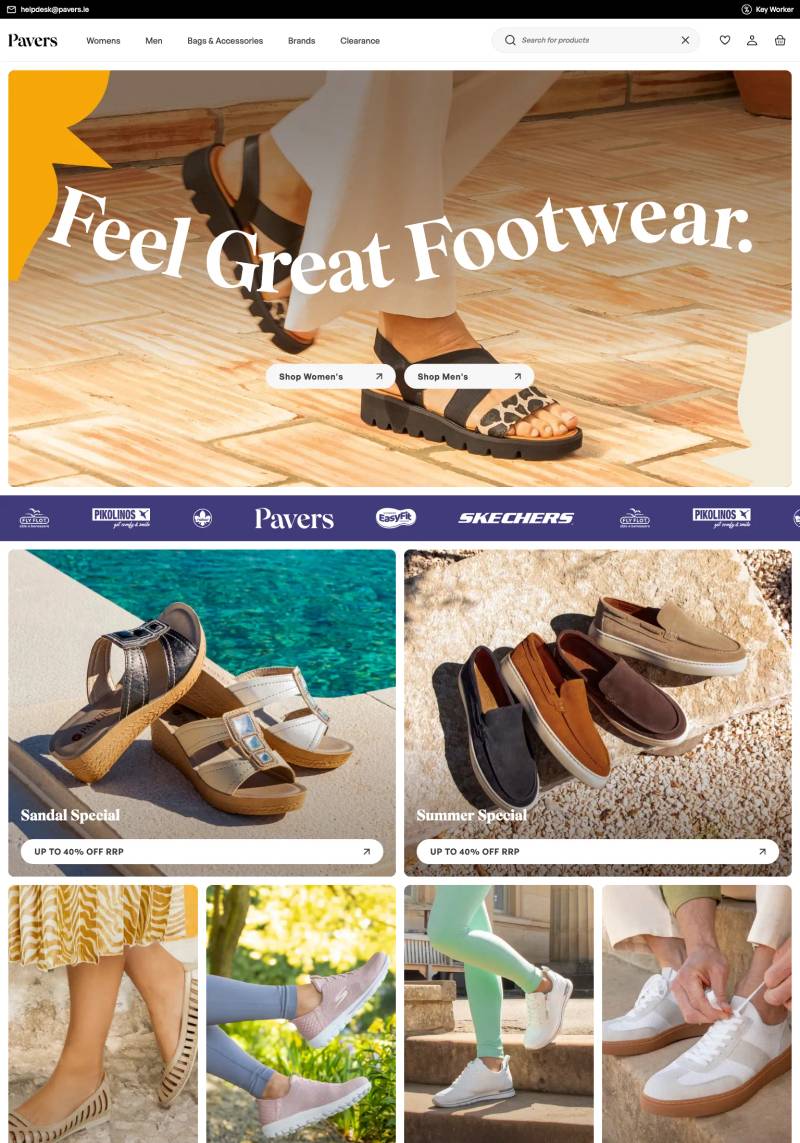
 - Amplify promotions with typography that converts. Zaatar’s bold “SUMMER SALE” treatment makes deals instantly engaging, while Pavers
 ’ punchy “Feel Great Footwear” message promises style and comfort in one clean package.
Browse these footwear websites for design inspiration that actually moves product.
Category
Platform
Style
 Mimic this
This sneaker brand site organizes products in a minimal four-column grid with consistent €219 pricing and studio shots showing each shoe at multiple angles.
 Mimic this
This vintage resale site pairs typewriter-set copy ("Start the hunt") with a seamless image grid mixing product shots, cats, and rave flyers.
 Mimic this
This Spanish footwear e-commerce site uses a scrolling "NUEVA COLECCIÓN" marquee and warm beige product grids to emphasize inventory rotation.
 Mimic this
This footwear e-commerce site uses overlapping editorial photography with rotated serif labels ("HALF BOOTS," "LONG BOOTS") layered across asymmetric desert-toned images.
 Mimic this
This footwear e-commerce site leads with a lifestyle hero featuring "Feel Great Footwear" in italic serif over warm wooden deck imagery and dual category cards with gradient text overlays.
 Mimic this
This vintage sneaker site uses warm tan borders on product cards and displays footwear against muted olive-toned lifestyle photography.
 Mimic this
This outdoor footwear site uses split-screen product features with lifestyle photography and composited boot shots, anchored by "HIKE HAPPY IN 2025!"
 Mimic this
This footwear e-commerce site separates gender-based shopping through side-by-side hero panels and uses full-bleed lifestyle photography in scrollable collection cards.
 Mimic this
Bandier
This activewear brand's pause page redirects customers to sister brand Carbon38 with two equal-weight CTAs and minimal typography on white space.
 Mimic this
This sustainable footwear site leads with "Look Good. Do Good." and anchors credibility through press quotes from Numéro, Forbes, and Footwear News.
 Mimic this
This footwear e-commerce site leads with a bare foot beside its shoe to demonstrate "the difference" in anatomical fit.
 Mimic this
wilkerkarlsson
This design studio site sells their custom typeface KWINC Grotesk alongside archived project files organized as clickable Mac OS-style folders.
 Mimic this
This basketball footwear site leads with a chain-link court photograph and "MAD GAME" in massive condensed type, positioning streetball culture over athletic performance.
 Mimic this
This football boot shop uses a plain-text sidebar filter and stacks product cards in a 4-column grid with uppercase titles and no visual embellishment.
 Mimic this
This alpaca fiber sock site leads with "SOFTER THAN CASHMERE, WARMER THAN WOOL" and uses a scrolling marquee of product categories as a perpetual navigation tool.
 Mimic this
This sneaker retailer uses neon-yellow text blocks and high-contrast on-feet photography to announce "FINAL CLEARANCE" across a dark editorial layout.