10 Best Game Designer Portfolio Website Examples

I found the best game designer portfolio websites that attract more players.
These portfolios prove you can ship engaging games through bold visuals and confident copy. Here’s what makes them convert:
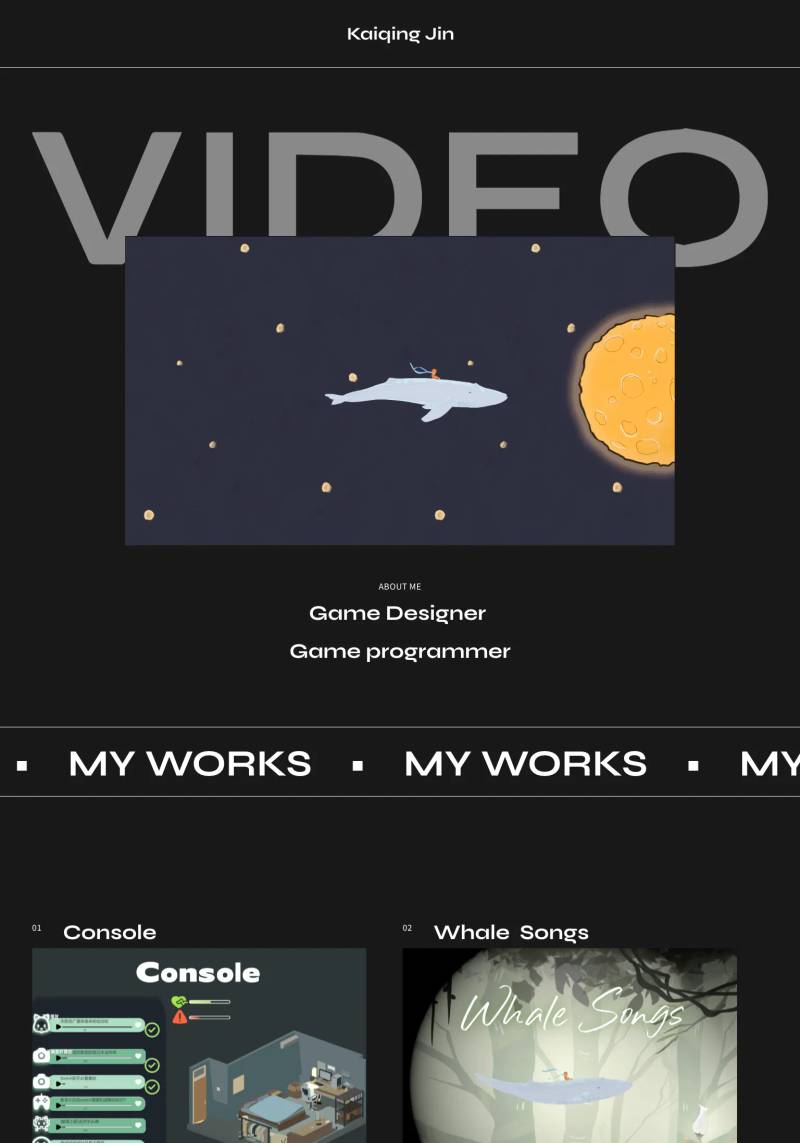
- Lead with your specialty, not your life story. Kaiqing Jin
 uses “bold, punchy copy” to instantly establish dual expertise in design and programming. Carter Burkett’s
 “striking photo-hero layout” immediately showcases developer skills above the fold.
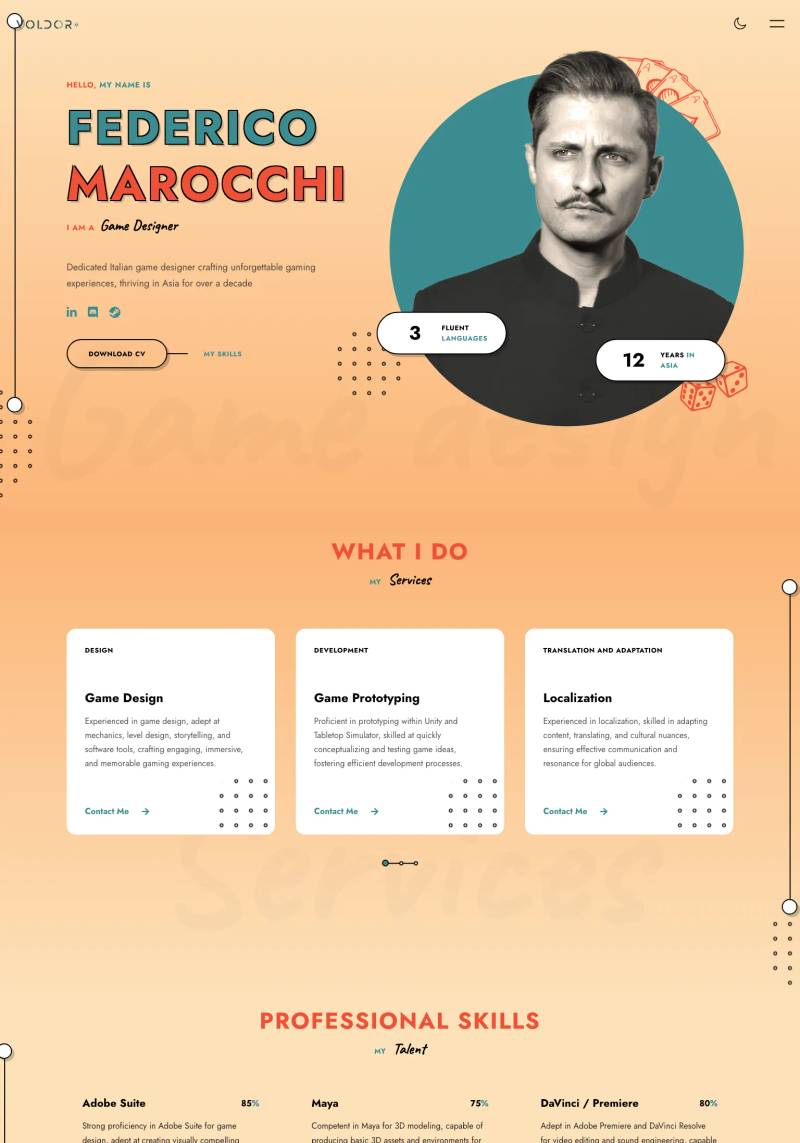
 - Use color psychology that matches your design philosophy. Federico Marocchi’s
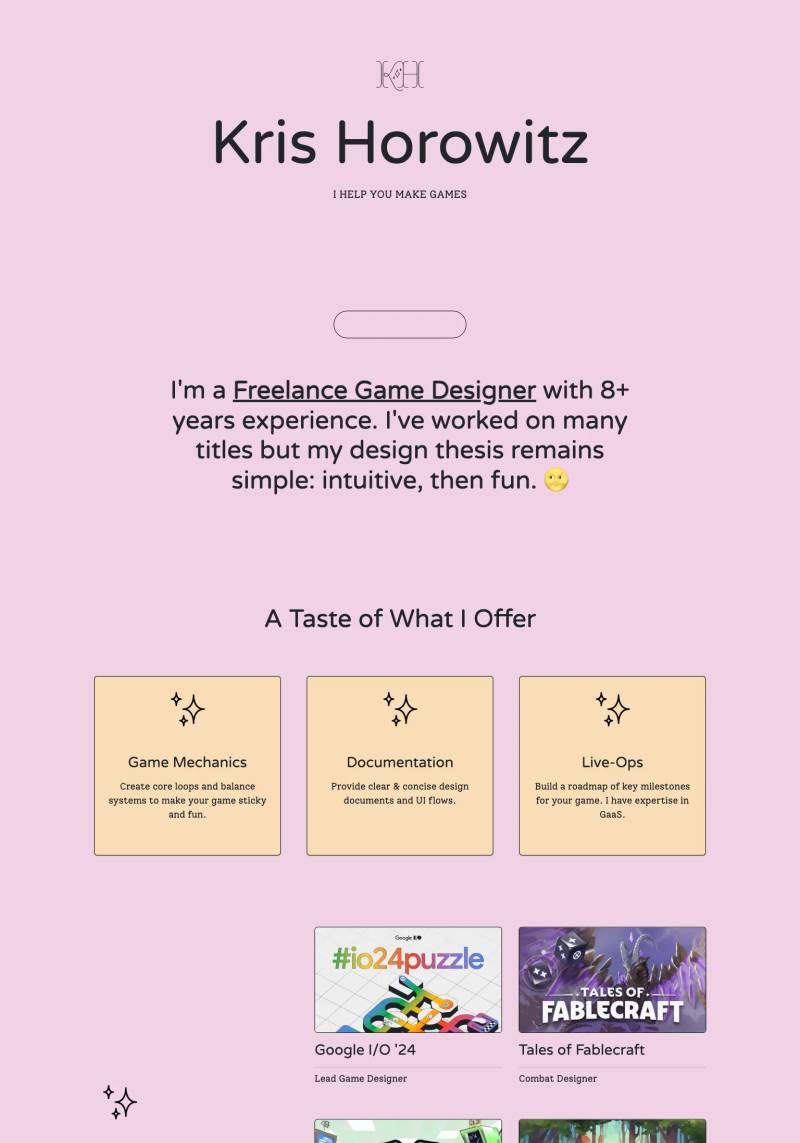
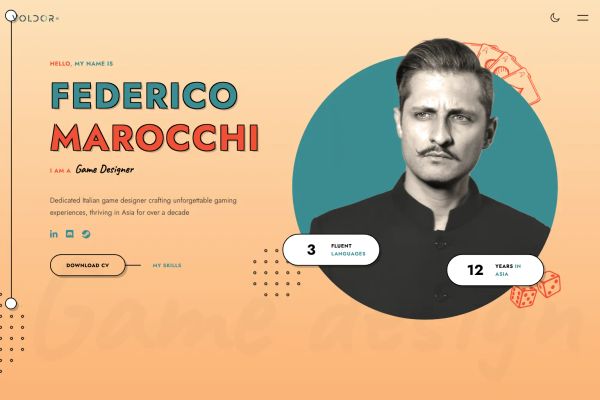 “vibrant orange and teal” screams creative vision, while Kris Horowitz’s
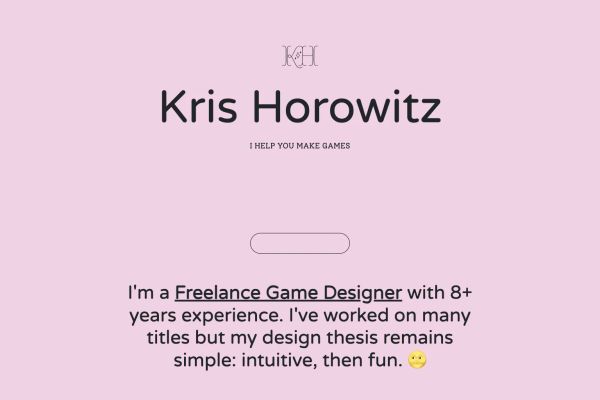 “soft pink accents” communicate approachable game mechanics. Scott Doxey’s
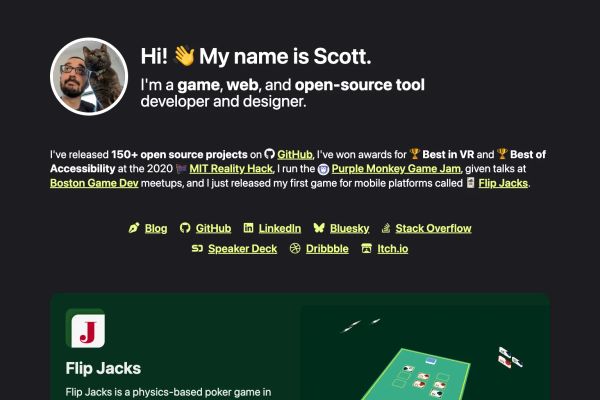 “muted greens against clean white space” signals tech-forward expertise.
 - Balance confidence with clarity. Jeff Gray’s
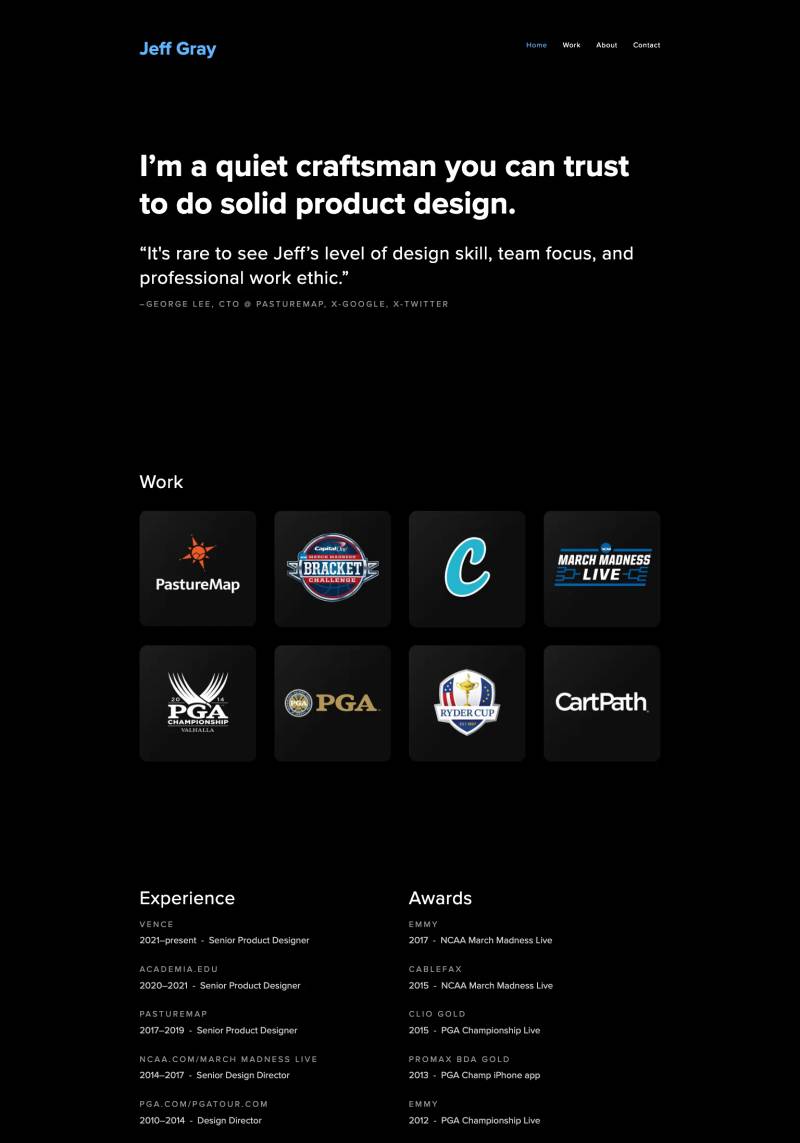
 portfolio uses “humble, confident copy that speaks to the craft” while Dring’s
 “playful game design and energetic copywriting” proves you understand player psychology. Clean navigation beats gamified gimmicks every time.
Check out these game designer portfolio website examples…
Category
Platform
Style
 Mimic this
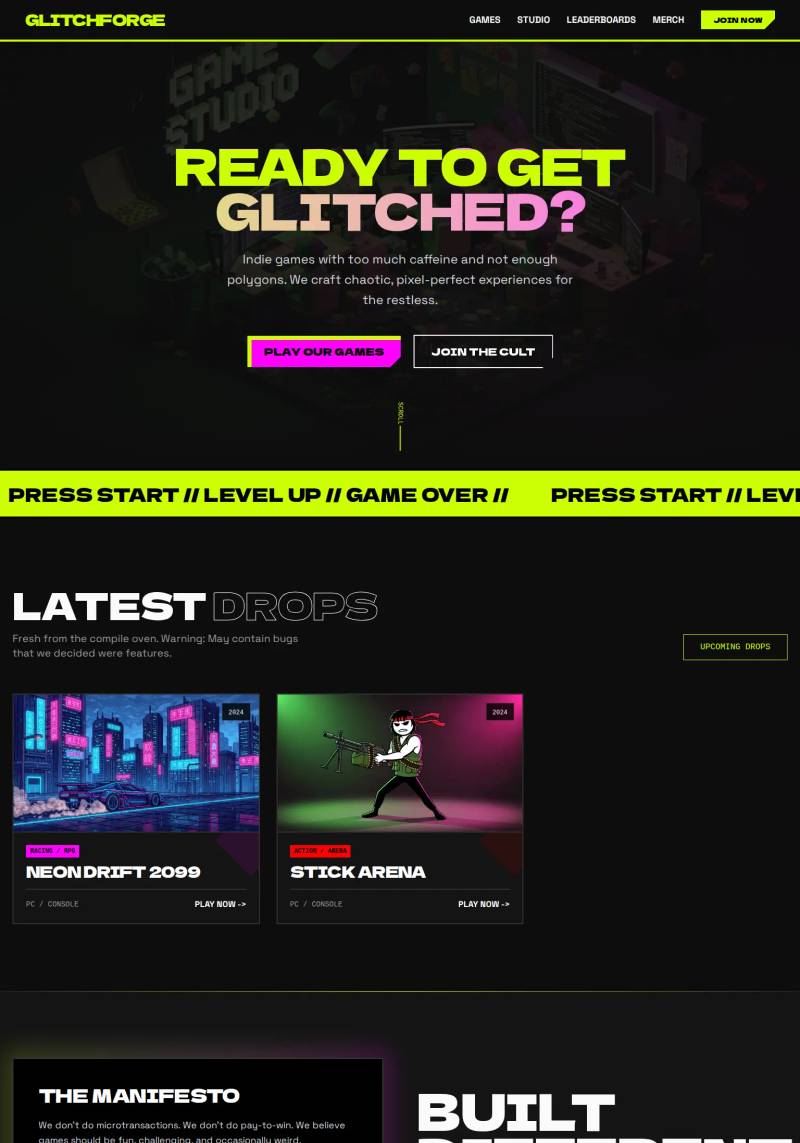
This indie game studio site uses neon lime and magenta on black with distorted display fonts and the tagline "Indie games with too much caffeine and not enough polygons."
 Mimic this
This game designer portfolio uses a soft pink background and yellow service cards to stand out from gaming industry norms, with "intuitive, then fun" as the design thesis.
 Mimic this
This party games e-commerce site uses a scrolling top banner with tiered discount codes ("BUY ANY 2 GAMES GET 20% OFF") and hand-drawn doodles layered behind lifestyle photography.
 Mimic this
This product designer portfolio leads with "Crafting Meaningful Products & Systems" and proves credibility through a grid of enterprise brand logos before revealing case study work.
 Mimic this
This game developer portfolio uses a two-column hero with cutout portrait photo overlapping text and blue circular scroll accent.
 Mimic this
This game designer portfolio uses oversized semi-transparent "VIDEO" text layering behind a whimsical space illustration to establish depth.
 Mimic this
This developer portfolio uses a centered dark layout with a purple atmospheric glow and pairs the hero intro "Hi, I'm Nico!" with dual ghost buttons for contact and CV download.
 Mimic this
Federico Marocchi
This game designer portfolio uses a warm peach-to-cream gradient with scattered geometric dice illustrations and stat badges highlighting "12 YEARS IN ASIA" and language fluency.
 Mimic this
This developer portfolio uses chartreuse accent links and card-based project layouts to distinguish game, web, and open-source work.
 Mimic this
This product design portfolio opens with "I'm a quiet craftsman you can trust to do solid product design," positioning reliability over flash with dark backgrounds and centered 110px client logo cards.