16 Best Journalist Website Examples

I found the best journalist website examples that boost your influence!
These portfolios nail credibility through strategic minimalism and content-first hierarchies. Here’s how to make your journalism site work harder:
- Lead with your flagship work. Florence Williams
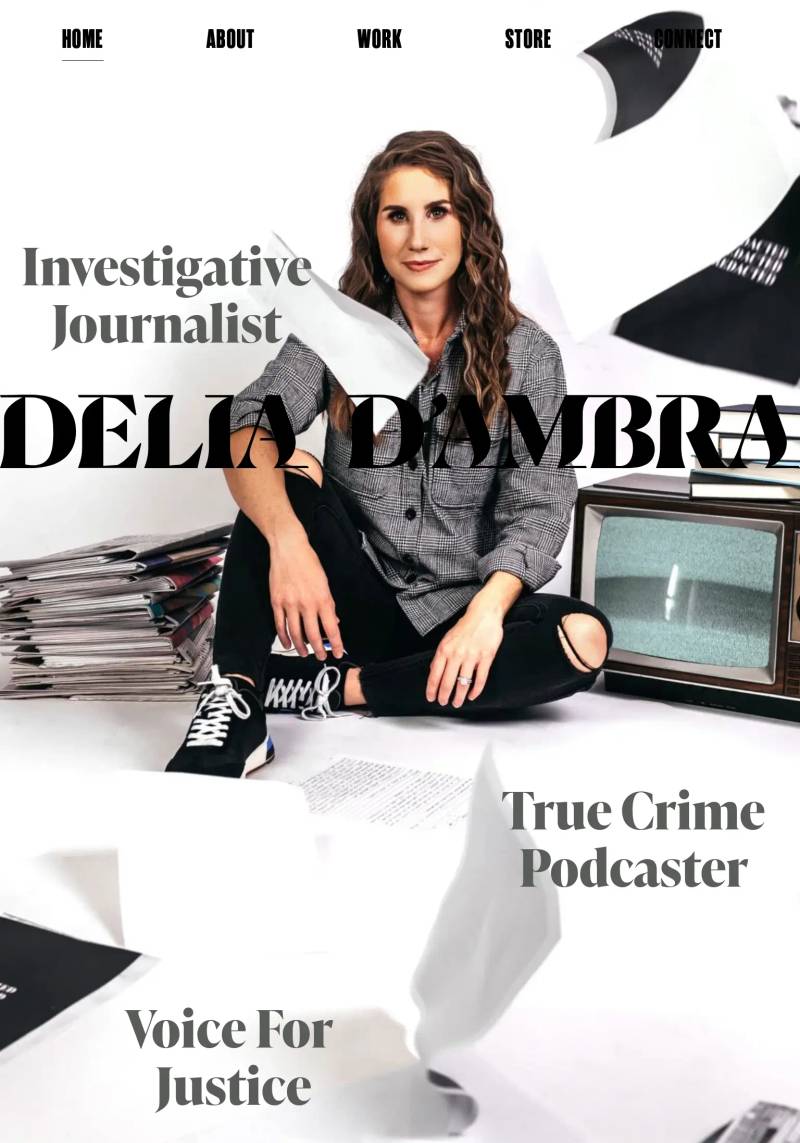
 and Delia D’Ambra both use bold typography to spotlight their strongest investigations immediately… no digging required.
 - Use high-contrast palettes for authority. Donald Boström’s
 black-and-white aesthetic with yellow accents and Jana Cholakovska’s
 stark monochrome establish instant professional credibility without visual clutter.
 - Make contact effortless. Bianca Barratt’s
 clean split layout with minimal navigation gets editors to your work and contact info in one scroll… because buried email addresses kill opportunities.
Let’s look at the gallery…
Category
Platform
 Mimic this
This journalist portfolio uses masking-tape-corner Polaroids and handwritten script fonts to present an adventurer's résumé as a scrapbook collage.
 Mimic this
This author and speaker site uses botanical illustrations in rust and gold as a framing device, anchoring the hero with "Reporting on the connections between humans and nature."
 Mimic this
This personal brand site for an investigative journalist layers her name in massive serif type directly over an editorial photograph surrounded by case files and a vintage TV.
 Mimic this
This journalist portfolio site uses a full-bleed portrait photo as the hero, positioning his name and role as right-aligned text overlay with stacked white button CTAs.
 Mimic this
Bianca Barratt
This writer's portfolio overlaps a portrait photograph with a cream card on a crumpled paper texture background.
 Mimic this
This personal portfolio site establishes credibility through two-column layouts with left whitespace and an editorial serif typeface naming brands and publications.
 Mimic this
Caroline Willis
This photographer's portfolio site uses a three-column masonry grid with no captions or hover states, letting candid NYC street photography dominate the layout.
 Mimic this
This broadcast journalist portfolio leads with a full-width demo reel, then organizes work categories—"Creative Storytelling," "Interviews," "U.S. Coverage"—as a four-column grid of thumbnail clips below.
 Mimic this
This photojournalist portfolio uses full-bleed black-and-white photography with left-aligned serif text and golden accent links to establish editorial credibility.
 Mimic this
This investigative reporter portfolio uses serif headings and monochrome photography to establish editorial credibility alongside a "Make It" call-to-action button.
 Mimic this
Kim Quitzon
This copywriter portfolio opens with a full-bleed portrait and the question "Everyone has a story to tell, what's yours?" overlaid in serif type.
 Mimic this
This editorial director's portfolio divides sections with an organic watercolor brushstroke transitioning from hero into a golden-yellow intro panel.
 Mimic this
This multimedia producer portfolio uses a light blue-gray block behind the hero statement and a two-column layout pairing TV production photos with editorial illustration thumbnails.
 Mimic this
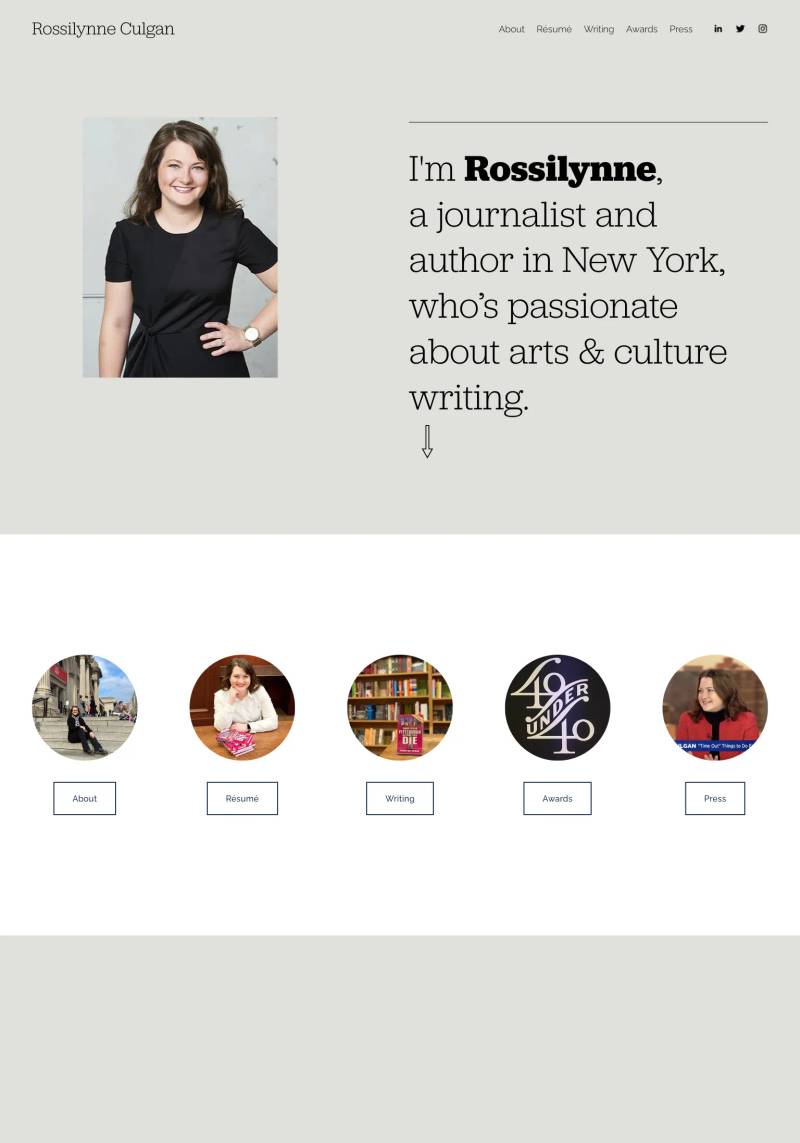
This journalist portfolio uses circular category images with rounded pill-button labels as the primary navigation, replacing traditional text links.
 Mimic this
This author site uses full-width coral and magenta color blocks to frame a serif-heavy layout, anchoring credibility with a pull quote attribution to The New York Times.
 Mimic this
This copywriter's portfolio uses a narrow single-column layout with serif typography and pairs her intro copy "I promise I'm normal, kind of" alongside a street-style photo.