16 Best Directory Website Examples

I found the best directory websites that boost your revenue!

Great directory sites nail three things: instant search access, clean information density, and trust signals that convert browsers into users. Here are some tips and tricks to make the best site:

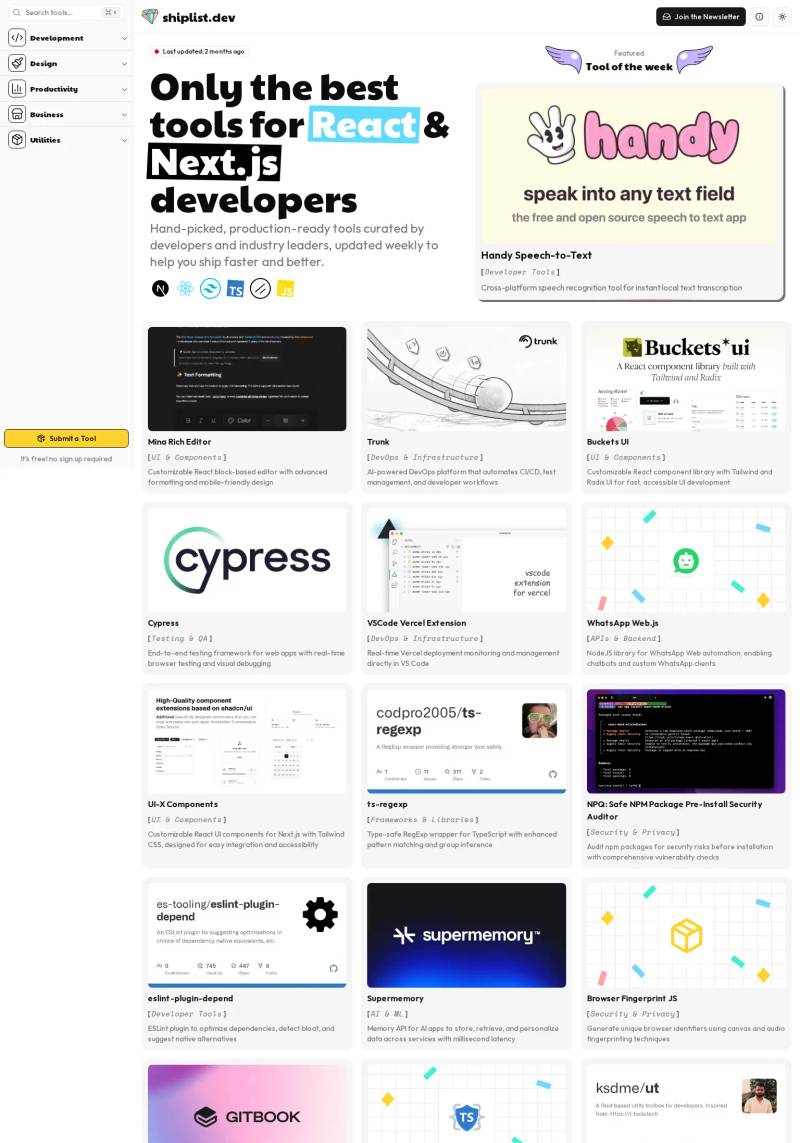
  • Lead with bold, benefit-driven copy. Shiplist.devDeveloper tools website — modern, minimalist typography design in light colors. "Only the best tools for React & Next.js developers" speaks directly to React builders with expert-vetted language, while ShopspirationEcommerce design inspiration website — dark, vibrant gradient-accented design with bold, serif-style typography in navy and white. "Curated list of the best stores built using Shopify" hooks visitors with “100+ beautifully designed stores” that promise proven conversion strategies.
  • Use curated grids with consistent card layouts. A1Curated design inspiration website with minimal, dark-themed layout and serif headline "The best websites on the web". and Yo.directoryStartup ecosystem directory website — clean, modern typography design in white and gray. "Directory of Directories" showcase clean, scannable grids where each listing gets equal visual weight, making comparison effortless and keeping users engaged longer.
  • Build trust through curation signals. Sections.wtfDesign inspiration website — bold, minimalist typography in black and red. "Sections.wtf" and MotusDark, minimal design inspiration website with geometric sans-serif typography and bright yellow accents. "Curated Well-Crafted Website Animations and Interactions for Inspiration." emphasize quality over quantity with “curated” components and verified examples, while HeroInspoDesign inspiration website — curated, decorative hero sections in neon yellow and dark tones. "The Best Hero Section Gallery for Web Designers" cuts through noise with honest, bold positioning that establishes authority instantly.

Browse these directory design examples for revenue-boosting inspiration.

1–16 of 16

What the Top 0.1% of Directory Websites Get Right

I analyzed these curated directory websites and found distinct patterns that separate the best from the rest.

Visual Identity: Dark Themes Drive Focus

Directory sites are overwhelmingly embracing dark aesthetics to make content pop.

  • Dark-first design systems: About 80% use near-black backgrounds (#0A0A0A to #111111 ) with white or light content cards. Sites like MotusDark, minimal design inspiration website with geometric sans-serif typography and bright yellow accents. "Curated Well-Crafted Website Animations and Interactions for Inspiration." and Okay.DirectorySEO tools directory website — sleek, minimal typography design in dark purple and blue tones. "The Best Directory of Listing Tools, Boilerplates, and Resources" create dramatic contrast that makes thumbnails and screenshots shine.
  • Accent color restraint: Roughly 70% stick to single accent colors rather than rainbow palettes. HeroType uses blue (#3B5BF6 ) while Framerpedia commits to purple (#7C5CFC ) throughout their entire system.
  • Typography hierarchy through weight, not size: Nearly every site uses the same sans-serif base (Inter or similar) but creates distinction through bold weights rather than dramatic size differences. Headers rarely exceed 32px.

→ Dark themes aren’t just trendy, they’re functional for showcasing visual content.

Layout and UX: Left Sidebars Rule Navigation

The winning layout pattern is surprisingly consistent across top performers.

  • Left sidebar + main grid dominance: About 75% use fixed left navigation with 3-column content grids. Shiplist.devDeveloper tools website — modern, minimalist typography design in light colors. "Only the best tools for React & Next.js developers" and Sections.wtfDesign inspiration website — bold, minimalist typography in black and red. "Sections.wtf" both nail this with ~180px sidebars and centered content areas under 1200px max-width.
  • Pill-shaped filter systems: Roughly 85% implement horizontal scrollable tag filters with high border-radius (~20px). These aren’t just aesthetic choices, they solve the “too many categories” problem elegantly.
  • Hero sections under 400px height: Every high-performing site keeps their hero compact. NirvalaIndian senior care website — warm, trustworthy minimal design in dark green and cream. "India's #1 Trusted Senior Care Finder" and Serene GatewaysTravel & tourism website — serene, minimalist typography design in deep teal, light blue, and white. "Serene Gateways" both cap hero sections around 320px, prioritizing content discovery over brand messaging.

→ Users come to directories to browse, not to be impressed by your hero section.

Copy and Messaging: Specificity Sells

The best directory sites abandon generic marketing speak for precise value propositions.

  • Quantified headlines work: About 60% include specific numbers in their H1s. Framerpedia says “8 new templates added” while Leigh BureauDark, modern speaker bureau website with clean, minimalist typography in black and white. "Speakers of Substance" promises “Speakers of Substance” rather than just “great speakers.”
  • Benefit-first CTAs outperform action verbs: Top sites use “Get weekly roundup” (A1Curated design inspiration website with minimal, dark-themed layout and serif headline "The best websites on the web".) and “Unlock Everything” (HeroType) instead of generic “Learn More” buttons. These tell users exactly what they’ll receive.
  • Category copy stays functional: Nearly all successful sites use straightforward category labels like “Agency,” “Animated,” “Business” rather than clever marketing terms. Framerpedia’s simple tags like “Modern” and “Large Type” beat creative alternatives.

→ In directories, clarity beats creativity every single time.

The pattern is clear: the best directory websites prioritize content discovery over brand expression. Dark themes, compact navigation, and specific copy all serve the same goal, getting users to their desired content faster. Your directory’s job isn’t to impress visitors with design innovation, it’s to help them find what they’re looking for without friction.